ChatGPT ads are coming, the UK announces a new international student strategy, and France votes for a social media ban Hybrid
NewsletterWelcome to The Student Funnel, a monthly higher ed sector newsletter from Hybrid, a leader in student marketing and recruitment strategies. We highlight news, trends, and behaviours that impact the sector and share insights on how to better connect with your audiences.
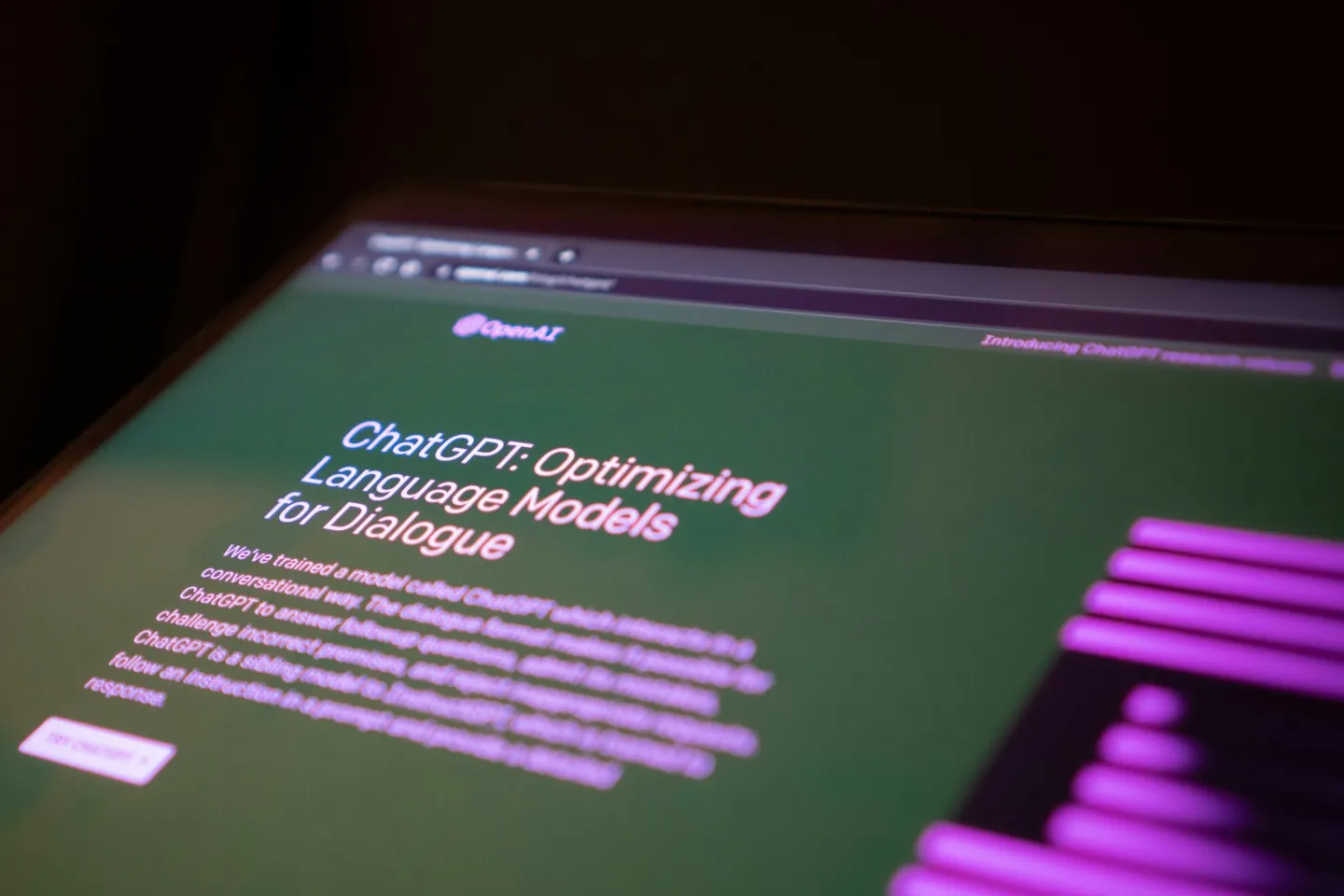
OpenAI has confirmed that ads will be rolled out on ChatGPT for free users and the new ChatGPT Go tier. Pro, Business and Enterprise will stay ad-free, but for most everyday users (including a lot of prospective students who are using it for researching study options), the experience is about to change.
Here’s how it’s due to unfold: ads will start testing in the U.S. in the coming weeks for logged-in adults. They’ll appear underneath ChatGPT’s answer, clearly labelled as sponsored, and only when there’s a relevant product or service linked to the conversation (think: course research, “which laptop should I buy?”, etc.). OpenAI is adamant that:
Ads won’t change what ChatGPT actually says in its answers
Conversations aren’t sold to advertisers
Users can turn off ad personalisation and keep an ad-free experience by upgrading
No ads will show for under-18s, and nothing will appear next to sensitive topics like health, mental health or politics
But the bigger shift here isn’t the format; it’s the context. ChatGPT isn’t a social feed or a search results page; it’s a decision-making space. People use it to think through “Which course is right for me?”, “Should I study abroad?”, “What’s the difference between X and Y university?” and then, at the bottom, they’ll soon see a couple of sponsored options. That’s a very different game from classic PPC. Your ad isn’t interrupting a scroll; it’s joining an in-progress decision-making journey.
1. AI is becoming a new intent channel. Students don’t go into ChatGPT to “browse”; they go in with very specific, goal-driven questions about courses, careers, visas, funding and where to study. Ads that appear at that moment of intent could end up being more powerful than traditional display, because they’re contextual, timely and directly tied to the question being asked. When education advertisers get access, this will feel closer to “AI PPC” than to banner ads.
2. Trust is your biggest asset, and easiest to lose. Universities are still seen as trusted information sources. If your presence in AI environments feels intrusive, pushy or misleading, it won’t just hurt performance; it could damage that trust. Strong GEO/AIO work should focus on genuinely useful on-site content, structured so your institution is cited naturally in AI answers, with transparent, student-centred messaging that makes any future ads feel like help rather than a hard sell.
3. Treat AI as a complementary layer in your content ecosystem. Don’t wait for an ad product to exist before you adapt. You can already:
Tighten up programme pages, FAQs and outcome stats so they’re easy for AI tools to summarise and “quote”.
Build awareness through existing search and social while assuming students will sanity-check you in ChatGPT or Gemini.
Use your own chatbots and assistants on course pages to mirror the kind of help students seek in ChatGPT – “Which course is right for me?”, “Can I work during my degree?”, “What does this lead to?”
We still don’t know specifics on when ChatGPT ad inventory will be available, with a pilot program due to be rolled out in the U.S. over the coming weeks. We’ll bring you all the latest on ChatGPT ads in The Student Funnel, so stay tuned!
ChatGPT competitor Gemini, owned by Google, has announced in response that the conversational AI platform won’t be introducing ads anytime soon. Google DeepMind CEO Demis Hassabis has now twice said there are “no plans” for ads in Gemini, including 2026, stressing that Google wants to focus on trust and assistant quality before monetisation.
That creates an interesting split between ChatGPT moving towards an ad-supported, intent-rich environment, while Gemini is positioned as a neutral, “on your side” assistant.
For university marketers, that means AI isn’t going to become one big, unified ad channel any time soon. You may end up testing paid formats in ChatGPT while treating Gemini more like an organic exposure and content-quality play.
UCAS’ January deadline data confirms what many UK admissions and marketing teams have been sensing already: demand is rising again, but not in a dramatic, post-pandemic way. It’s more of a demographic tide than a wave.
The number of UK 18-year-olds applying has climbed to 338,940, up 4.8% on last year, but the application rate is basically flat at 40.7% (down from the 42.8% peak in 2022). In other words, there are simply more 18-year-olds in the system, and they’re applying at roughly the same rate as before.
Across all four nations, applications from the most disadvantaged 18-year-olds are up. Looking specifically at IMD Quintile 1 or equivalent (i.e. the bottom 20% of areas, representing the highest levels of socioeconomic deprivation), England had a 5.8% increase in applicants, while Wales, Scotland and N. Ireland saw an increase of 13.6%, 9.7% and 6.9% respectively.
International undergrad demand via UCAS is also ticking up, with 124,830 applicants (+5.1%), including a 10% rise from China to 34,380. India, the US and Ireland are all nudging upwards too, reinforcing the UK’s pull at the undergraduate level even as policy noise continues (more on this below).
Demand is skewing towards higher-tariff providers fastest, with more modest growth for medium and lower-tariff institutions. At the same time, almost 45% of UK 18-year-olds now include at least one “live at home” option, so universities will need to strengthen their commuter offering if they want to stay competitive with this growing segment.
For marketing teams, the picture is clear: more school-leaver demand, tougher competition at the top end, a growing commuter mindset, and a need to rethink how you speak to (and support) mature and local learners alongside your international growth priorities.
The UK government has introduced an updated International Education Strategy (IES) from the previous version released in 2019. In a nutshell, the new IES has moved away from specific international student targets and has instead focused on education exports, with a headline goal of £40bn a year by 2030. Growth is expected to come less from bringing more students into the UK and more from TNE (branch campuses, dual degrees, offshore delivery) and ELT (English Language Training), skills and edtech.
Sir Steve Smith will stay on as International Education Champion, with a brief to unblock partnerships in priority markets like India, Indonesia, Nigeria, Saudi Arabia and Vietnam, and to open up “emerging” markets such as Brazil, Mexico and Pakistan. A new ministerial Education Sector Action Group (ESAG) will bring together sector leaders to turn the high-level strategy into concrete action plans.
Under the surface, this is a clear pivot towards TNE. Governments want British education delivered locally at a lower cost, without losing their brightest students overseas for years at a time, while UK universities want diversified income and less dependence on bringing students into the UK.
Reactions across the sector have been mixed. British Universities International Association (BUILA) have welcomed the export ambition and the recognition of standards. While others argue it’s really an education export strategy rather than a full international education vision, noting what’s missing: stronger commitments on outward mobility, languages, and the Home Office’s role in making any of this deliverable.
France is on track to follow in Australia’s footsteps by banning social media use for young teens. Lawmakers in the National Assembly voted 130 to 21 to prohibit under-15s from using platforms like TikTok, Snapchat, Instagram and X, and to also extend mobile phone bans into high schools. The bill will now go to the Senate, with the government hoping it will take effect for new accounts from September 2026, and platforms given until 31 December 2026 to deactivate non-compliant existing accounts.
“The emotions of our children and teenagers are not for sale or to be manipulated, either by American platforms or Chinese algorithms,” President Macron said via a video broadcast on Sunday, citing concerns around mental health, cyberbullying and harmful content.
Critics, including some child protection groups and left-wing MPs, argue it’s “digital paternalism” and say the focus should be on holding platforms accountable and improving education, not banning teens outright.
For education marketers, this is another signal that policy risk around youth social media is rising fast in key recruitment markets – and that owned channels, email, search and in-school outreach will become even more important touchpoints with younger prospects and their parents.

Not that long ago, student search was relatively simple: get found on the Google SERPs, drive traffic to your website, and nurture from there. But it’s safe to say that those days are behind us.
Today’s prospective students are bouncing between TikTok, Reddit threads, university rankings, and AI tools. They’re asking ChatGPT questions like, “What are the best universities to study psychology?” and scanning Google’s AI Overviews without clicking on a single website link, often making decisions without even seeing your homepage.
It’s easy to interpret this as a threat. In reality, it’s a reset. For universities willing to adapt, AI search presents a chance to become more visible, more helpful, and more relevant in the places students actually look.
Continue reading our AI search insights here.